
Moving to San Diego is one of the better decisions you can make if you value weather, outdoor access, and a city that feels genuinely livable rather than just impressive on a map. But like any major move, the details matter — and getting them right before you arrive makes the transition dramatically smoother.
Here’s what you actually need to know.
Why People Move to San Diego
San Diego draws a consistent mix: military families (Naval Base San Diego and Marine Corps Base Camp Pendleton are both here), tech and biotech workers, people leaving Los Angeles for more space and better value, and retirees chasing perpetual 70-degree weather.
The city has real strengths beyond the climate. The food scene is exceptional, the outdoor options are remarkable (beaches, mountains, and desert all within two hours), and the neighborhoods are distinct enough that you can find something that genuinely fits your personality. North Park feels different from La Jolla, which feels different from National City, which feels different from Ocean Beach.
When you’re moving to San Diego, picking the right neighborhood matters as much as picking the right apartment.
12 Essential Things to Know Before Moving to San Diego
1. The Weather Is as Good as People Say
San Diego averages 266 sunny days per year. Winters are mild — you’ll rarely need a coat. The one weather caveat locals call “June Gloom”: May through July brings morning marine layer that can keep the coast overcast until early afternoon. It burns off by noon most days. Don’t let it dampen your expectations.
2. Cost of Living Is High — But Manageable
Moving to San Diego means adjusting your housing budget upward from most U.S. cities. The median rent for a one-bedroom runs $1,900–$2,400 depending on neighborhood. National City and La Mesa, just south and east of San Diego proper, offer meaningfully lower rents ($1,600–$2,000 for a one-bedroom) without being far from anything.
Groceries and dining run slightly higher than the national average. Gas and utilities are above average. But the lack of extreme heat or cold keeps utility bills lower than you’d pay in Phoenix or Chicago.
3. Transportation: Plan Around a Car
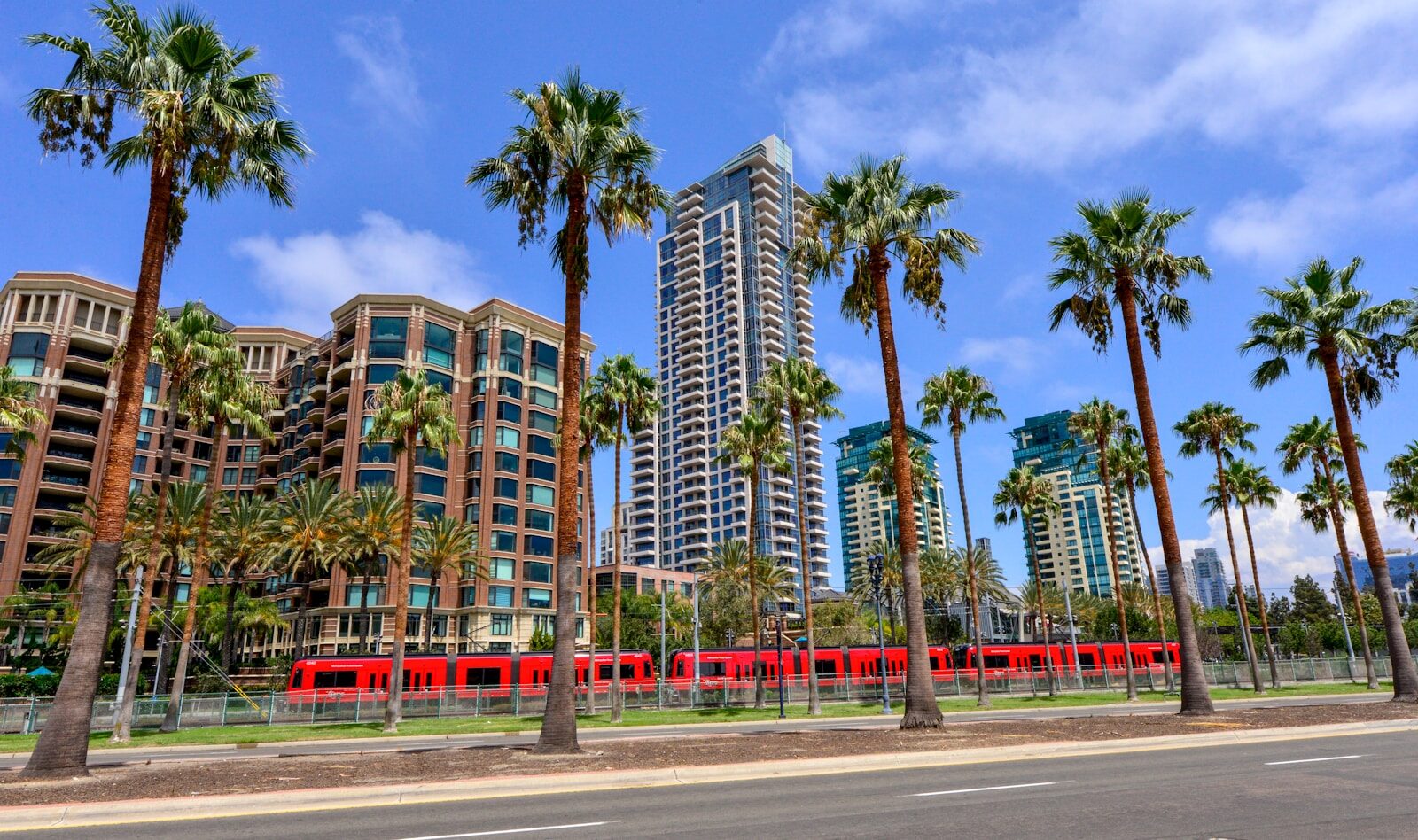
San Diego is a car city. The trolley system (the MTS Trolley) covers downtown, Mission Valley, and the East County, but most neighborhoods require a car for daily life. If you’re moving to San Diego without a car, look specifically for apartments near trolley lines or the COASTER commuter rail if you’re headed toward North County.
Traffic is real but manageable compared to LA. The I-5, I-8, and I-15 corridors are the main pinch points during rush hour.
4. Neighborhoods: A Quick Reference
North Park, South Park, and Normal Heights are the walkable, restaurant-dense neighborhoods popular with younger renters. Hillcrest is the LGBTQ+ hub with strong community character. Ocean Beach and Pacific Beach are beach-adjacent and lively, with rents that reflect it. La Mesa and National City offer more affordable options with good access to the rest of the city.
Mission Hills and Bankers Hill are quieter, older neighborhoods popular with professionals. Chula Vista and Eastlake are family-friendly suburban options to the south.
5. Start Your Apartment Search Before You Arrive
San Diego’s rental market moves quickly — good apartments at fair prices don’t stay listed for long. Start searching 60–90 days before your move date. If you can visit in person before signing a lease, do it. If not, video tours are standard practice and most landlords will accommodate them.
ReadyPad offers no-broker-fee apartments in San Diego, National City, and La Mesa with same-day application approvals and bilingual English/Spanish support — useful if you’re searching remotely or on a timeline.
6. Military Families: Know Your Options
San Diego has one of the largest military populations in the U.S. If you’re PCSing here, the Navy Lodge and temporary housing options are booked months out — arrange them early. La Mesa, National City, and Chula Vista are popular for military families because of their proximity to base, good schools, and lower rents.
The VA office and SCRA protections apply if you need to break a lease early due to deployment.
7. The Outdoor Scene Is the Main Event
Moving to San Diego without a plan to be outside frequently is missing the point. Balboa Park is 1,200 acres of museums, gardens, and trails in the middle of the city. Torrey Pines State Natural Reserve has some of the best coastal hiking in California. The surf spots range from beginner-friendly (Mission Beach) to serious (Black’s Beach, La Jolla).
Mount Laguna and Cleveland National Forest are 45 minutes east. Palm Springs and Joshua Tree are two hours. Baja California is 30 minutes from downtown.
8. The Food Scene Is Seriously Good
San Diego punches well above its weight for food. The taco scene alone justifies moving here — the city’s proximity to Mexico means the best street tacos in the U.S. are here, particularly in City Heights and Barrio Logan. The craft beer scene (Stone, AleSmith, Ballast Point) is nationally known. The Gaslamp Quarter handles upscale dining; North Park handles the creative independent restaurant scene.
San Diego also has a growing wine and spirits culture. If you’re into organized tasting experiences, companies like The Wine Voyage run curated wine and spirits events around the city — a good way to meet people after you move.
9. Healthcare Access Is Strong
Moving to San Diego gives you access to UC San Diego Health, Scripps Health, and Sharp Healthcare — three major systems with facilities throughout the city. Wait times at urgent care centers are manageable compared to many cities. Covered California enrollment is available if you need marketplace health insurance.
10. Earthquakes Are Real, Not Theoretical
San Diego sits near several fault lines. Earthquakes happen — usually minor, occasionally notable. The Rose Canyon Fault runs through the heart of the city. The practical implication: anchor bookshelves, keep an emergency kit (water, food, first aid), and check whether your building has been seismically retrofitted if it was built before 1980.
11. Bilingual Is an Asset
San Diego’s proximity to Tijuana means roughly a third of the city speaks Spanish as a first or second language. If you’re bilingual, you’ll feel right at home. If you’re not, learning basic Spanish makes everyday life easier and is an appreciated gesture. Many service workers, landlords, and business owners operate primarily in Spanish in National City and Barrio Logan.
12. Set Up Banking and Utilities Before You Arrive
SDG&E (San Diego Gas & Electric) handles most of the city’s electricity and gas. Set up your account before your move-in date. For internet, Cox, AT&T Fiber, and Spectrum are the main providers. Water is typically included in apartment rent; if not, SDCWA handles municipal water service.
San Diego Neighborhoods at a Glance
| Neighborhood | Avg 1BR Rent | Vibe | Best For |
|---|---|---|---|
| North Park | $2,100–$2,500 | Walkable, restaurant-dense | Young professionals |
| National City | $1,600–$2,000 | Affordable, bilingual | Military families, budget renters |
| La Mesa | $1,700–$2,100 | Suburban, quiet | Families, remote workers |
| Ocean Beach | $2,200–$2,700 | Beach, bohemian | Beach lifestyle |
| La Jolla | $2,800–$4,000+ | Upscale, coastal | High income, UCSD |
| Chula Vista | $1,800–$2,200 | Family-friendly, south | Families, value seekers |
| Hillcrest | $2,000–$2,500 | Urban, LGBTQ+ community | Community-focused renters |
Getting Settled: First Two Weeks
Register your vehicle with the California DMV within 20 days of establishing residency. Get a California driver’s license within 10 days. Register to vote (you can do it online). Set up your new address with USPS mail forwarding.
Find your nearest grocery store (Ralphs, Vons, Sprouts, and H-E-B are the main chains), your nearest urgent care, and your nearest park. San Diego rewards the people who explore it early.
For more on San Diego neighborhoods and renting, see our guides to apartments for rent in National City CA, apartments for rent in La Mesa CA, and the ultimate guide to renting in San Diego.
Further Reading
For more on relocating to San Diego, Redfin’s San Diego housing market data gives up-to-date rental and purchase pricing by neighborhood, and Zillow’s San Diego rentals provides a broad view of what’s available across the city’s price ranges.